 SIGMA ROBOTICS 西格瑪機器人 SIGMA ROBOTICS 西格瑪機器人
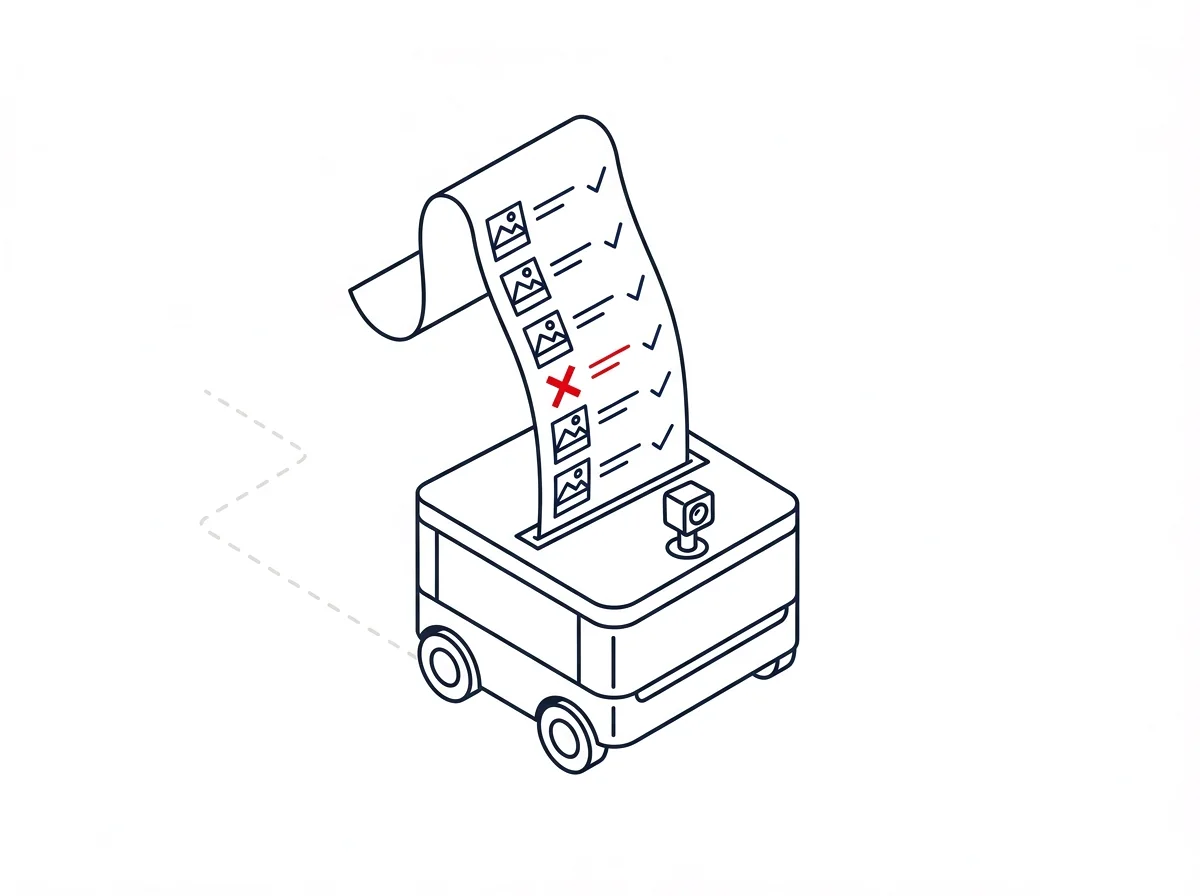
 Security staff get harder to hire every year, the night shift most of all; yet every fire extinguisher, fire door and night light on the checklist is a record you have to produce for safety filings and insurance claims. Let the robot handle routine checkpoints — photographing and reading each one, alerting instantly on anomalies — so on-duty staff only deal with what truly needs a person.
* One inspection point costs under half a cent (about NT$0.004) in AI reading. About 100 inspection points patrolled for 100 nights — 10,000 readings — total roughly NT$44 in AI reading cost, with change to spare from a single NT$50 coin. Token usage is logged per call and converted at 2026 flash-lite model rates (Google bills monthly); excludes the robot unit and subscription fees. The system has now run continuously for over 100 days.
The same robot can take on more on-site jobs than inspection alone
A visitor steps up to the kiosk and talks to the AI model directly, naming the person or place they're looking for; the AI understands and directs the robot to walk them there — no need to keep the front desk staffed, and no need for visitors to find their own way.
Beyond the onboard camera, it can tie into existing external cameras on site for simultaneous multi-angle recognition; cross-checking one target from several viewpoints means sharper reads and fewer blind spots.
Centralized scheduling and reporting across multiple robots and floors, with a web-based management interface — open it right on the control room's existing screen.
Source: Preferred Robotics (manufacturer's public cases)
The Japan cases above are the manufacturer's public information (KDDI / Toda Corporation / GMO / JR East); for those not listed on this site's Japan cases page, source: Preferred Robotics.
Pick one building and trial it for a week. At the end you'll get: a patrol report specific to your site + side-by-side data comparing robot patrols against human patrols — the kind you take straight into a management committee or the GM's office.