
Automating In-Clinic Transport with Robots: Kachaka at 温耳鼻咽喉科
温耳鼻咽喉科 (Karatsu, Saga Prefecture)
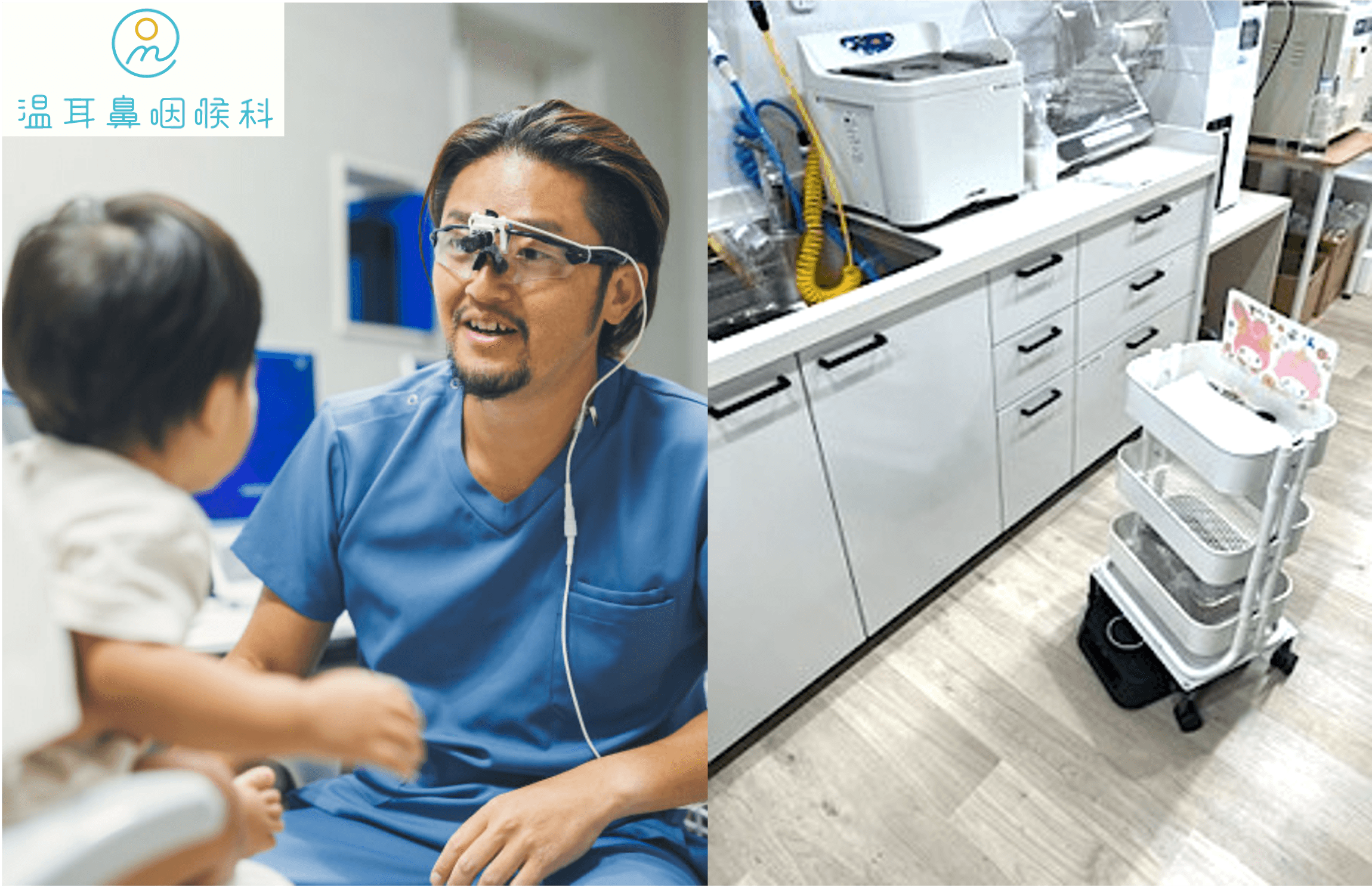
Kachaka already has a strong track record across clinics in Japan. This piece looks at how it is used at 温耳鼻咽喉科 in Karatsu, Saga Prefecture, based on an interview with the clinic’s director, Dr. 温光太郎.
温耳鼻咽喉科 is a community ear, nose, and throat practice built around the principle of staying close to every patient. Beyond standard ENT care, it has brought in advanced capabilities such as same-day surgery, and continually looks for ways to make the visit more comfortable.
The Challenge: Cut Indirect Work Like Transport, Give the Time Back to Patients
ENT clinics typically have long waits, yet each consultation often lasts just 2 to 3 minutes. 温耳鼻咽喉科 sees about 100 patients a day, so making the most of that limited time to enrich each interaction and raise satisfaction is the team’s top priority.
That is why the director kept asking a simple question: could indirect work like transport be reduced, so the recovered time could go into the physician’s consultations and the nurses’ patient care?
How It Started: From an Instagram Video to a One-Week Free Trial
The director first learned about Kachaka through a video on Instagram. The deployment shown closely matched the clinic’s own staff workflows, giving him a concrete picture of how it could work, so he applied for the one-week free rental trial.
From the pre-trial briefing and initial setup through to live operation, the Kachaka support team was there at every step:
- Pre-trial briefing: about 30 minutes of feature overview, discussion of how to use it, and Q&A
- Initial setup: support configured the robot around the clinic’s intended workflow and walked staff through operation
- Trial period: help was available anytime via LINE or phone, and questions were answered quickly
How It’s Used: Automating Instrument Transport
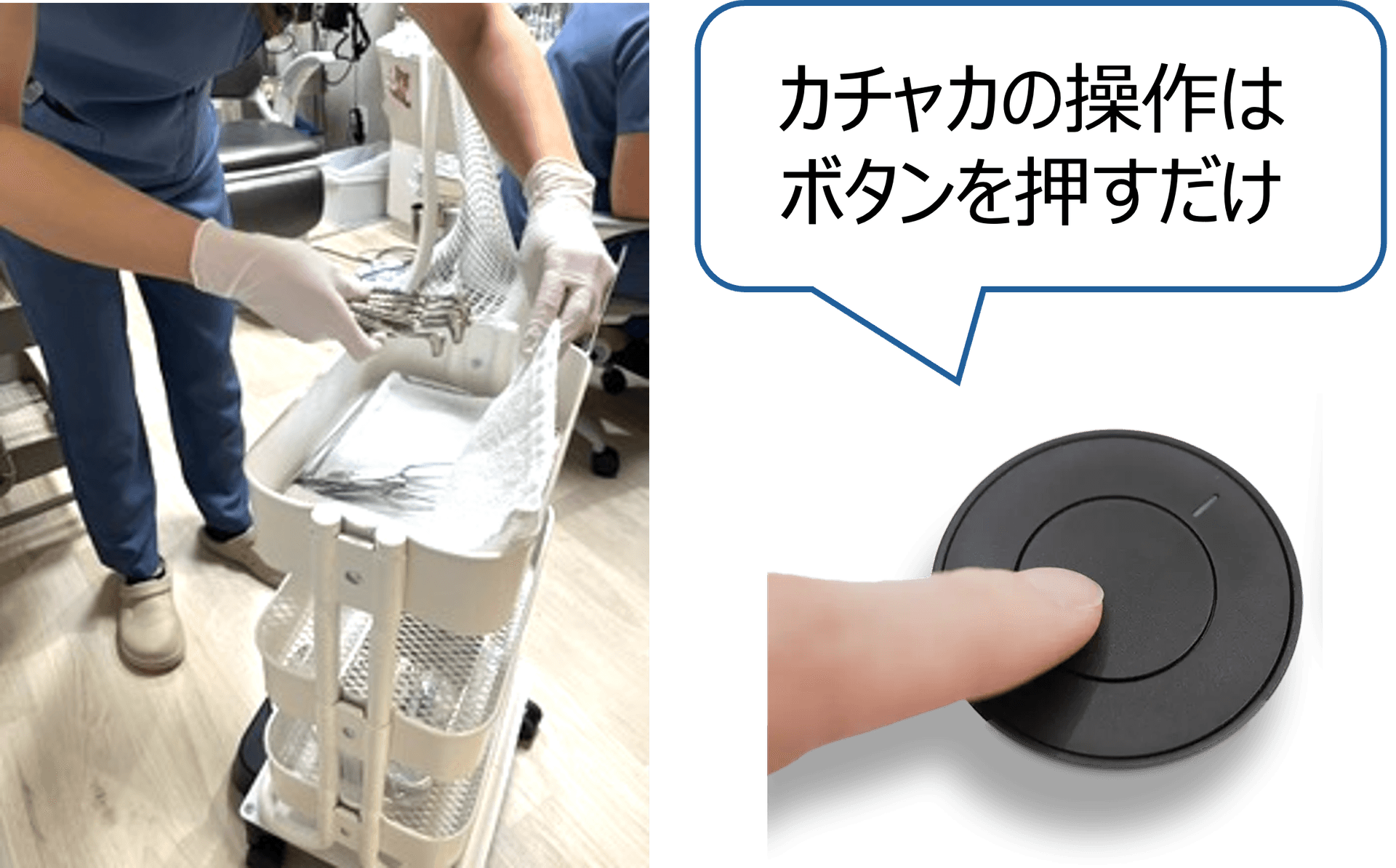
At the clinic, Kachaka mainly shuttles between the sterilization room and the two exam rooms, handling two jobs: carrying used instruments from the exam rooms to the sterilization room, and returning sterilized instruments to the exam rooms.
It is summoned with Kachaka buttons placed in the sterilization room and each exam room: a single press brings Kachaka over, and a long press sends it back home. The director notes that this button operation is so simple that it was one reason the nurses picked it up and put it to use right away.
The Results: Less Nurse Transport Time, Made Visible in the Data
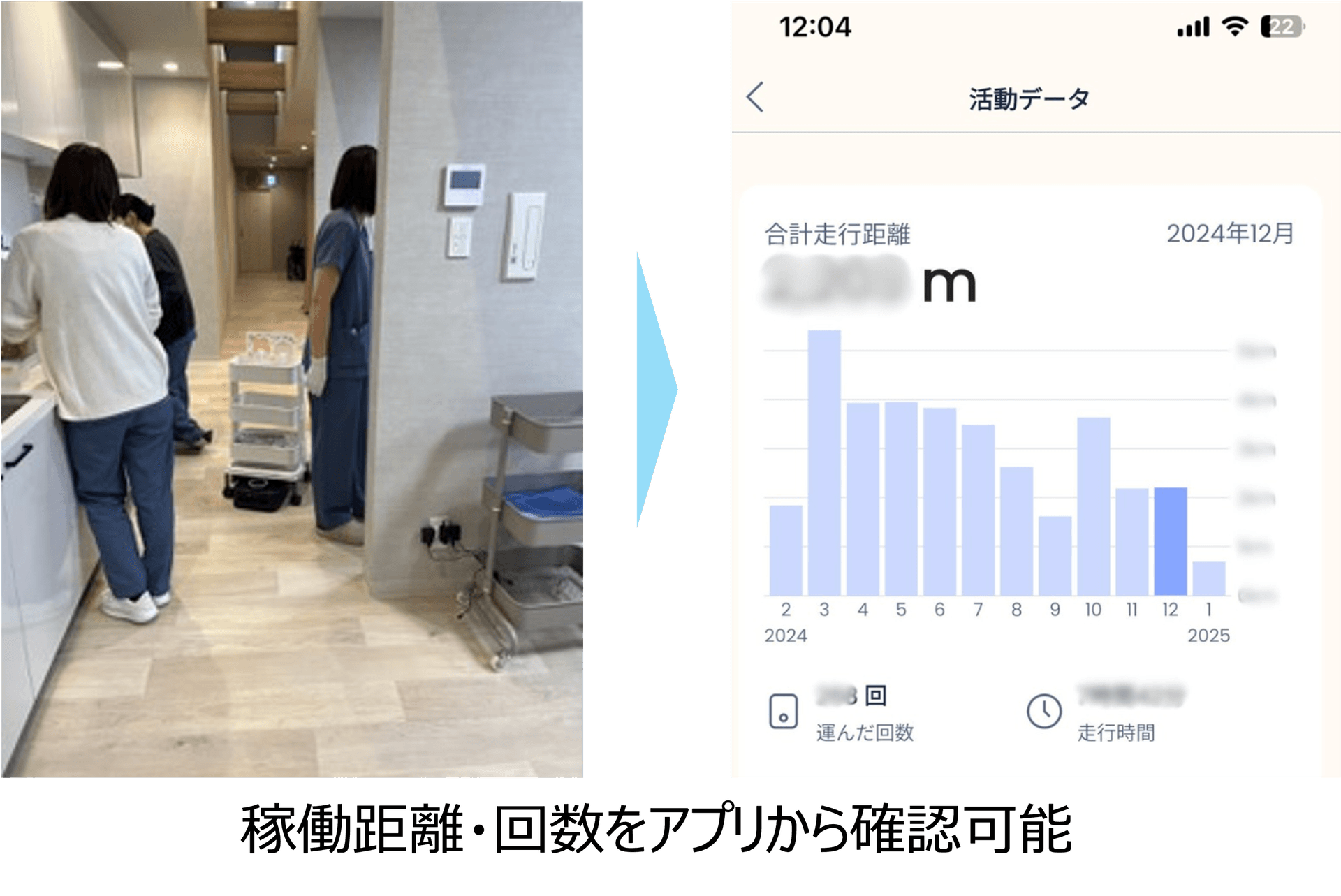
During the trial, the clinic checked the robot’s daily travel distance through the Kachaka app. Within just a few days every nurse was using it on their own initiative, and Kachaka’s travel distance reached about 1 km per day — distance the nurses would otherwise have walked themselves, now sharply reduced.
The lived sense that they could confidently hand transport over to Kachaka, combined with effects they could confirm in the data, became the deciding factor for full adoption. With that, the clinic achieved its original goal: nurses gained more time for patients, able to explain procedures and follow-up care plans in greater detail.
In Their Words: From “We’ll Just Do It Ourselves” to Treating Kachaka as a Teammate
Before the rental was even requested, the nurses had said they would keep handling transport themselves, just as before. Yet only a few days into the trial, everyone felt how convenient it was and welcomed Kachaka as a “transport colleague.” Now they not only trust it with transport but dote on it — over Christmas, the nurses fitted Kachaka with reindeer antlers.
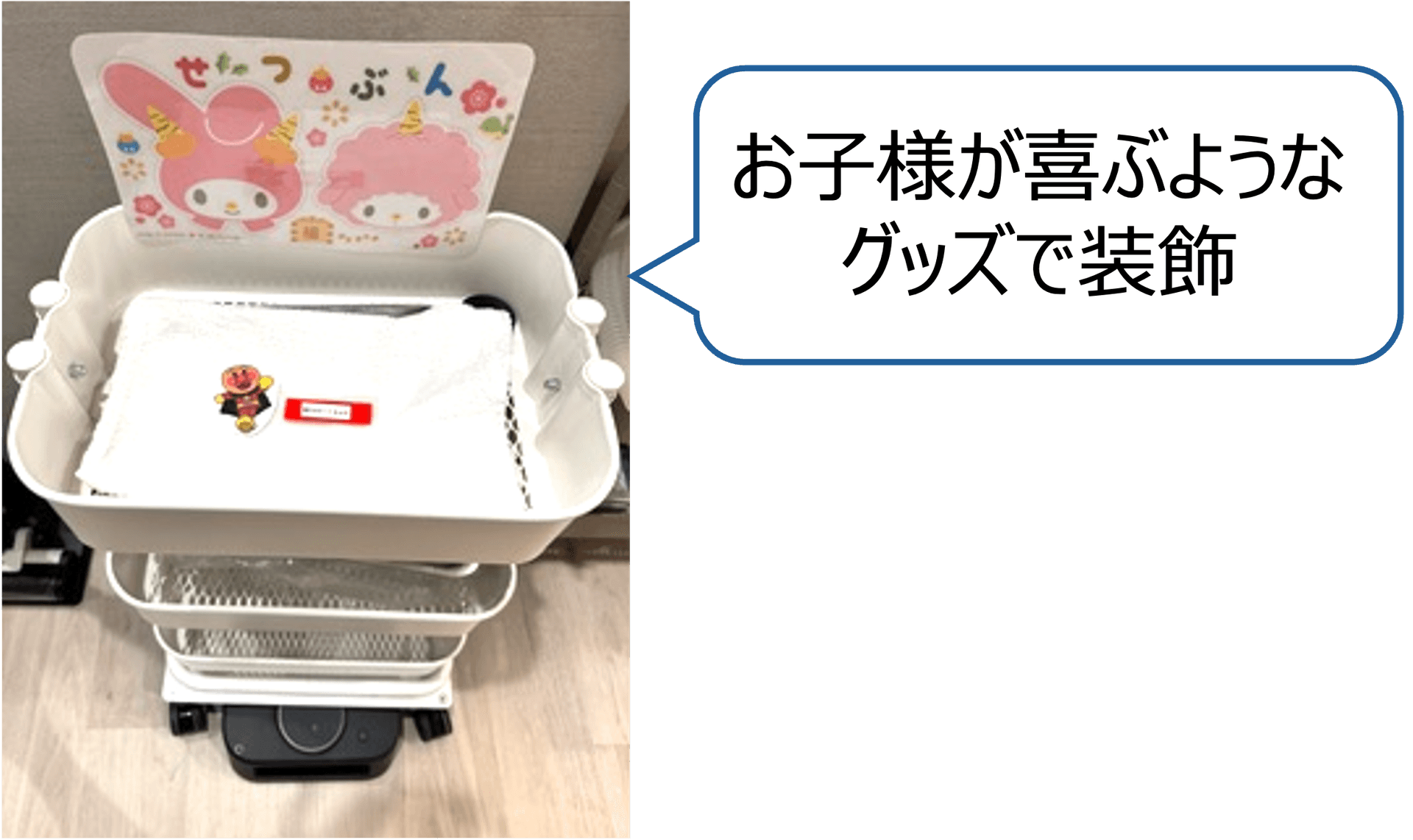
For patients, too, Kachaka is more than an efficiency tool — it has become an opening for conversation. Because the clinic’s Kachaka rolls right into the exam rooms, many patients are delighted to see it and strike up a chat naturally. Children love it in particular: the clinic put Anpanman art on Kachaka’s shelf and added reindeer antlers at Christmas, creating a sense of fun that eases the tension of a visit and softens the mood in the exam room.
In closing, the director says Kachaka is genuinely useful, and his candid take is simply that “they really did a wonderful job.” It fully delivered on the goals of lightening the nurses’ load and securing time for patients, while also becoming a catalyst for conversation — and he looks forward to it continuing as a dependable teammate that creates new value beyond efficiency. He also suggests that any practice considering a deployment start with the free rental plan and experience the benefits firsthand (the free rental is a program offered by Preferred Robotics in Japan).