
"More Time to Spend With Patients" — How KK Clinic Ichihara Deployed Kachaka
KK Clinic Ichihara (KKクリニック市原)
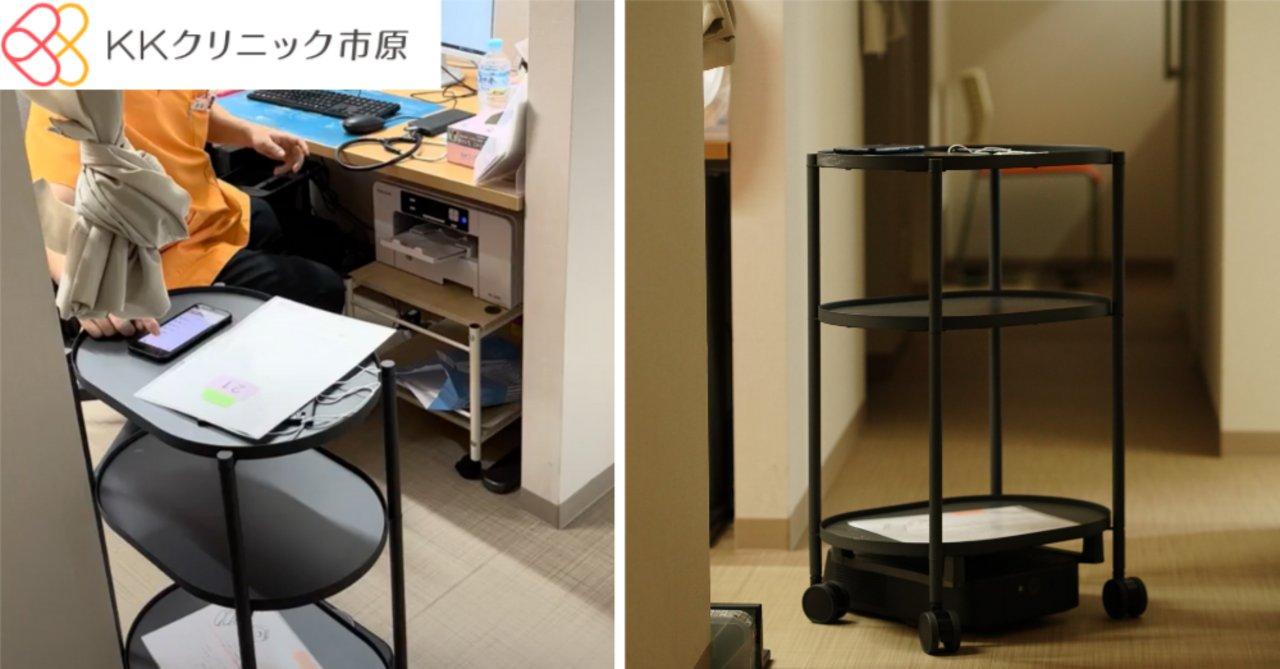
Kachaka isn’t just for the home — it performs just as well in commercial settings like offices, hospitals, and workshops. This article looks at how “KK Clinic Ichihara,” an internal medicine and hematology clinic in Chiba Prefecture, Japan, puts Kachaka to work.
About KK Clinic Ichihara
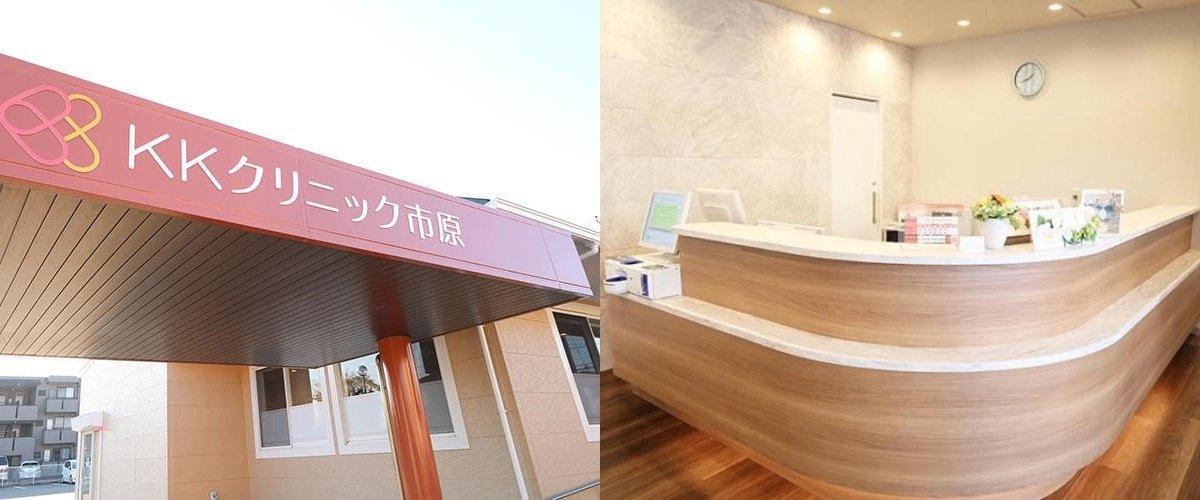
The clinic specializes in internal medicine and hematology. Alongside general internal care for conditions such as hypertension and diabetes, it also treats blood disorders including anemia, leukemia, and malignant lymphoma. Hematology specialists are rare, and treatment is typically available only at a handful of general hospitals — most ordinary clinics simply cannot handle these cases. The clinic opened in Matsushima, Ichihara City, Chiba Prefecture, to help close that gap.
Official website: https://kkclinic-ichihara.com/
Why They Brought In Kachaka
Although the clinic had already adopted electronic medical records, going fully paperless proved difficult. Every visit still required pulling the patient’s record folder, which staff then carried by hand between the front desk, exam rooms, and treatment room. The number of trips per day added up quickly — a real burden on the doctors and staff doing the carrying, and on patients too. That prompted the clinic to ask whether Kachaka could make the process more efficient.
Before committing, the clinic ran a Kachaka trial. Beyond its smooth movement and reliable task execution, what sealed the decision was the staff themselves: by the end of the trial, many were reluctant to part with Kachaka and had grown genuinely attached to it. That ultimately led to full adoption.
Deployment Date
Since July 2023.
How Kachaka Is Used Today, and What Changed
The clinic’s honest assessment after deploying Kachaka: “It’s been an enormous help.”
Almost no changes to existing workflows were needed. The record-carrying work previously done by people could be handed over to Kachaka virtually as-is, and operations got underway smoothly with no special preparation.
Kachaka now handles all medical-record transport within the clinic:
- Carrying the records of checked-in patients from the front desk to the exam room or treatment room
- Carrying the records of patients who have had blood drawn from the treatment room to the exam room
- Carrying the records of patients who have finished their consultation from the exam room back to the front desk
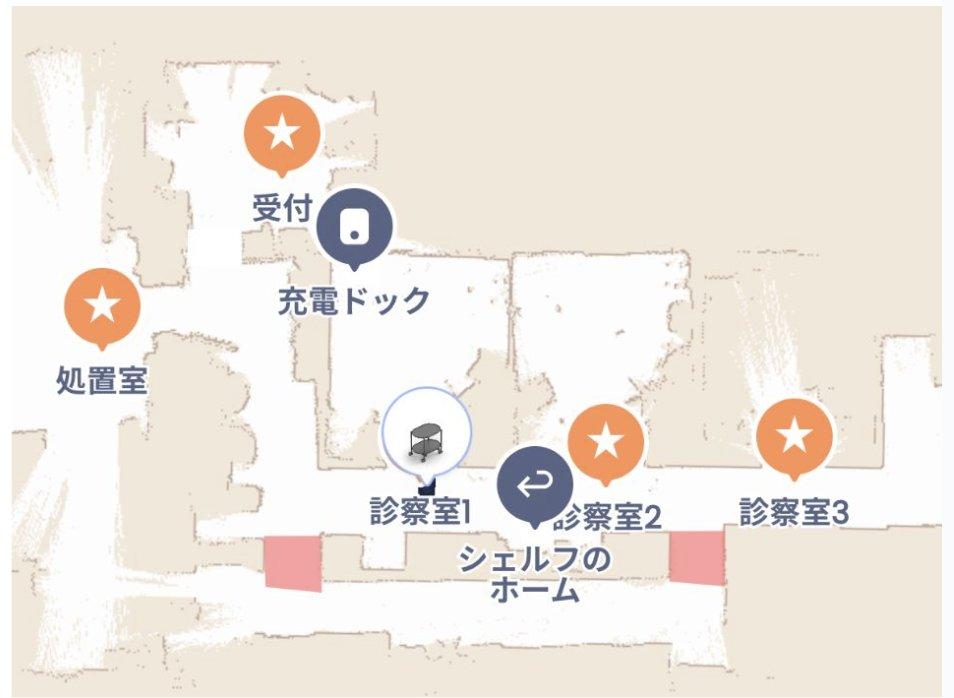
The map above shows Kachaka’s operating range, with the front desk, each exam room, and the treatment room all set as destinations.
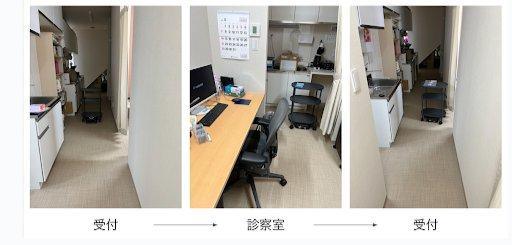
The payoff was a dramatic reduction in walking for doctors and staff. This not only improved consultation efficiency but also gave doctors and nurses more guaranteed time to spend with patients.
It also surfaced a problem the clinic hadn’t recognized before: front-desk staff were constantly interrupted in the act of “collecting records from patients,” which dragged down their productivity. Once that step disappeared, front-desk productivity rose — and patient wait times shrank as a result.
On top of that, with neither staff nor patients having to carry records themselves anymore, the clinic feels it has lowered the fall risk for elderly patients.
Today, Kachaka has become an indispensable part of the clinic.