
4 Kachaka Pro Units Automate 110 km of Monthly Transport | Demant Japan Case Study
Demant Japan K.K.
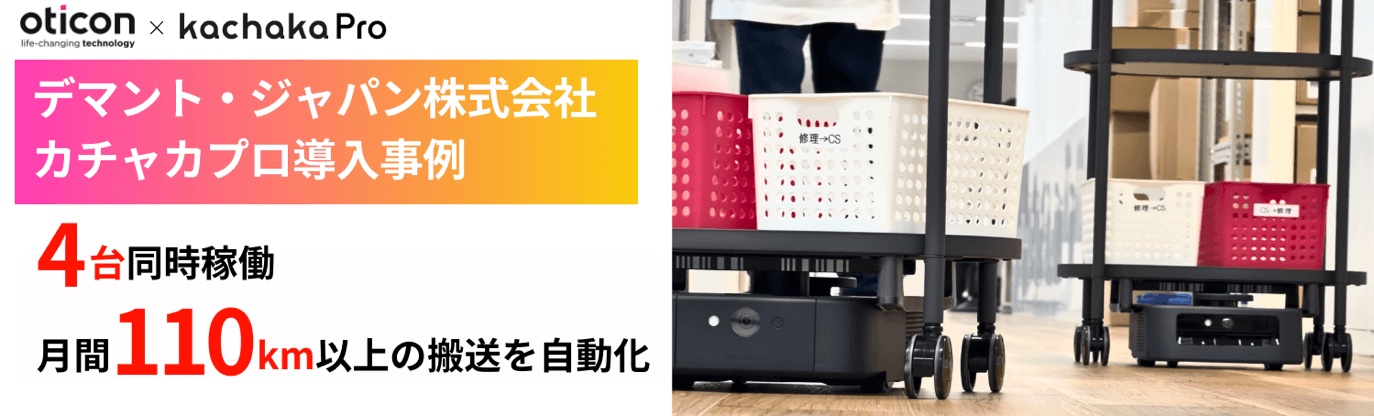
Preferred Robotics, Inc. (headquarters: Chiyoda-ku, Tokyo; Representative Director and CEO: 礒部達) has announced that its autonomous transport robot “Kachaka Pro” is now in full operation at Demant Japan K.K. (headquarters: Shinagawa-ku, Tokyo). This article covers the challenges that led to the Kachaka Pro deployment and how it is used today.
The Customer: Demant Japan K.K.
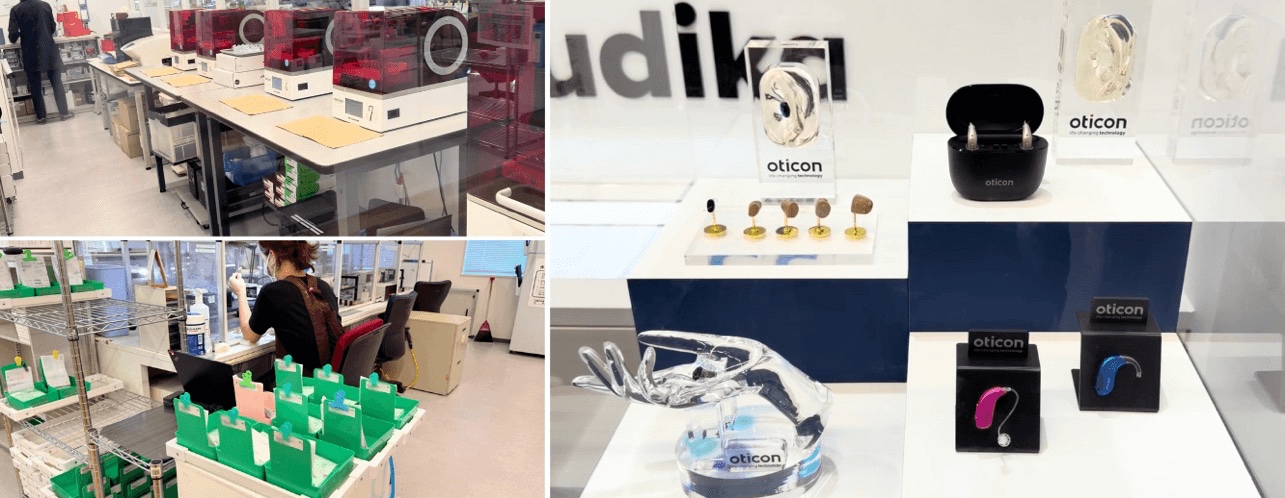
Demant (headquarters: Denmark) is a global group in hearing healthcare and audio technology. Its Japanese subsidiary, Demant Japan, has more than 50 years of history. At Shinagawa Seaside — its only production site in Japan — the company manufactures and repairs large volumes of hearing aids every day. It operates 3 brands, including Oticon, Demant’s flagship hearing aid brand.
The company adopted Kachaka Pro as part of a site relocation, aiming to build a high-efficiency production system and cut down on transport work. By running 4 Kachaka Pro units in parallel, the time staff once spent walking now goes straight back into their real core work: manufacturing and repair.
Background: Using a Site Relocation to Eliminate Movement Waste with Transport Robots
To keep pace with rising demand for hearing aids and hearing-test equipment, the company relocated last August to a new site roughly 1.5 times the floor area of the previous one. During the move, the production line was reorganized into a one-way layout in which work advances step by step without backflow, improving operational efficiency.
A larger floor, however, meant that manual material transport would inevitably become a heavy burden. The old site in particular generated a lot of wasted back-and-forth transport between production lines. The company therefore seized the relocation as an opportunity not only to reconfigure each line into a one-way layout, but to hand off the inter-process transport itself to robots — building a shop floor that thoroughly eliminates movement waste.
Why Kachaka Pro: Reasonable Cost and the Flexibility to Match Floor Needs
Against this background, the company evaluated and compared transport robots from 3 to 4 vendors. It ultimately chose Kachaka Pro for its strong cost-performance and flexible configuration:
- Reasonable deployment cost: Compared with competing products, Kachaka Pro could be introduced at a notably lower cost, promising a high return on investment.
- Set up entirely in the app: Some competing products required physical markers to be laid out across the company’s expansive manufacturing environment. Kachaka Pro lets you freely define no-go zones and travel routes right in the app — with zero modification to the environment.
- Compact and agile: Its small footprint and tight turning radius let it operate safely even in areas where people and robots work side by side.
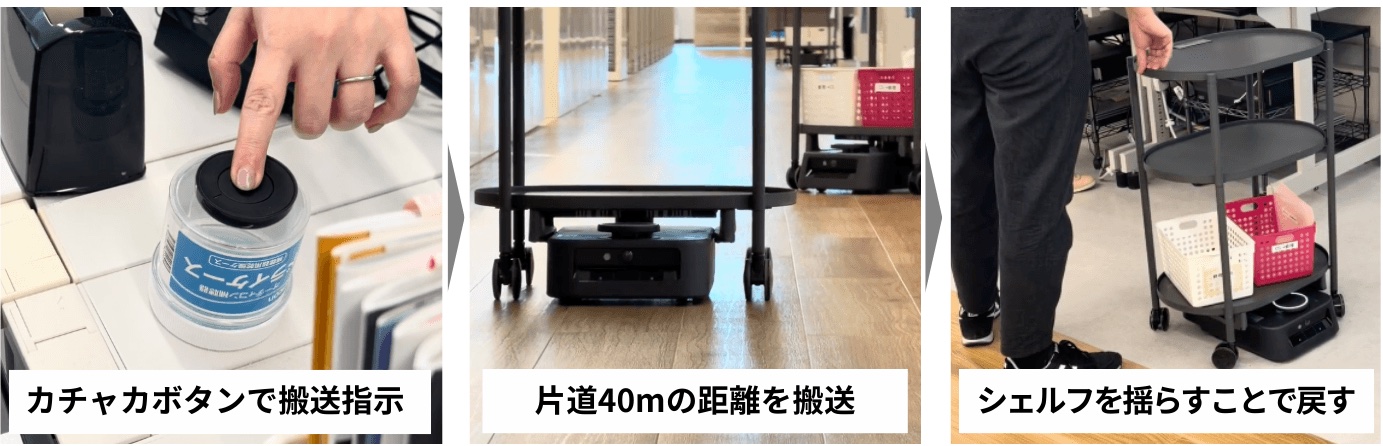
- Simple to operate: Commands can be issued with the Kachaka button or simply by shaking a shelf. The operation is so straightforward that it quickly took root on the floor.

How It’s Used: Operating 4 Kachaka Pro Units by Button
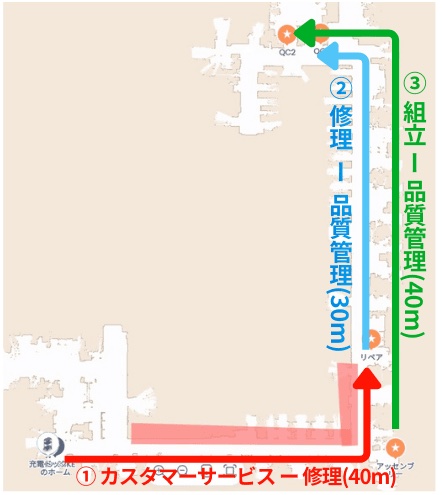
All 4 Kachaka Pro units currently run at full capacity, mainly carrying hearing aids and work orders (instruction sheets) along the following 3 routes:
- Customer Service → Repair Process (2 units): Carry hearing aids that need repair, along with work orders detailing the repair, from Customer Service to the Repair Process about 40 meters away.
- Repair Process → Quality Management Process (1 unit): Carry repaired products to the Quality Management Process about 30 meters away (one way).
- Assembly Process → Quality Management Process (1 unit): Carry newly assembled custom hearing aids to the Quality Management Process about 40 meters away.
On the outbound trip for each route, a single press of the Kachaka button issues the command; for the return trip, the unit is set to come back automatically when staff shake the Kachaka shelf.
Results: Over 110 km of Automated Transport Every Month
With many employees using the fleet frequently, the combined monthly figures for all 4 units are shown below — a dramatic reduction in human movement. The time staff once spent on transport has been fully redirected to their real core work, such as manufacturing and repair:
- Total distance traveled: over roughly 110 km per month
- Total runtime: 73 hours per month
Voices from the Floor: Live Operation from Day One, with Travel BGM Smoothing the “Next Task” Setup
Kachaka Pro was embraced on the floor smoothly from the very start, largely thanks to how easy it is to operate. The intuitive “just press a button or shake a shelf” approach let the team move into full live operation immediately after deployment. “It has already become indispensable on the floor.”
The ability to play background music (BGM) while traveling has also contributed to floor efficiency. As a Kachaka Pro approaches playing its BGM, workers notice it coming before the goods even arrive, giving them time to prepare to receive the delivery and keeping the whole workflow flowing smoothly.
A Success Story from Japan, Broadcast to Sites Worldwide
These results also drew senior executives and a Company Manager from the Danish headquarters to come and observe Kachaka Pro in action. Demant Japan says it hopes to share the way this — its only production site in Japan — puts the robots to work as a success story it can broadcast to the world.
Conclusion: Boosting Shop-Floor Transport Efficiency with Kachaka Pro
With 4 Kachaka Pro units, Demant Japan has automated over 110 km of transport per month, establishing a system that lets staff concentrate on core work such as manufacturing and repair.