Automating Network-Equipment Quality Testing with a Robot: Allied Telesis's Kachaka Deployment
Allied Telesis
Kachaka isn’t just for the home. It is equally at work across commercial settings: offices, healthcare and elder care, food service, and more. This case looks at Allied Telesis, a specialist network-equipment manufacturer operating in markets worldwide, and how it uses Kachaka to automate quality testing.
About Allied Telesis
Allied Telesis designs, manufactures, and sells networking hardware and software solutions. The division that deployed Kachaka is primarily responsible for the development and quality management of Ethernet switches, routers, and their management software.
Official site: https://www.allied-telesis.co.jp/
Why They Adopted It: Automating Quality Testing
It started with a goal: automate quality testing. The company’s in-house wireless LAN technology, “Channel Blanket,” is engineered so that a terminal stays connected even while moving — a property the team needs to validate constantly. Until now, staff verified it by carrying a terminal and walking back and forth across the office by hand, and the team had long been searching for a more efficient approach.
They tried strapping a smartphone to a roughly 2-meter conveyor belt and running it back and forth, but the distance was too short to deliver the results they wanted. They also looked at the food-running robots common in restaurants, but the price was a barrier. While they were weighing alternatives — “Could a conveyor like the ones in conveyor-belt sushi work?” — they happened to see Kachaka featured on a TV information program. As the lead put it: “I thought this just might work.” They headed straight to a store displaying Kachaka to check the details.
When They Deployed
In May 2023, they bought and deployed Kachaka the moment it launched.
How They Use It and What Changed
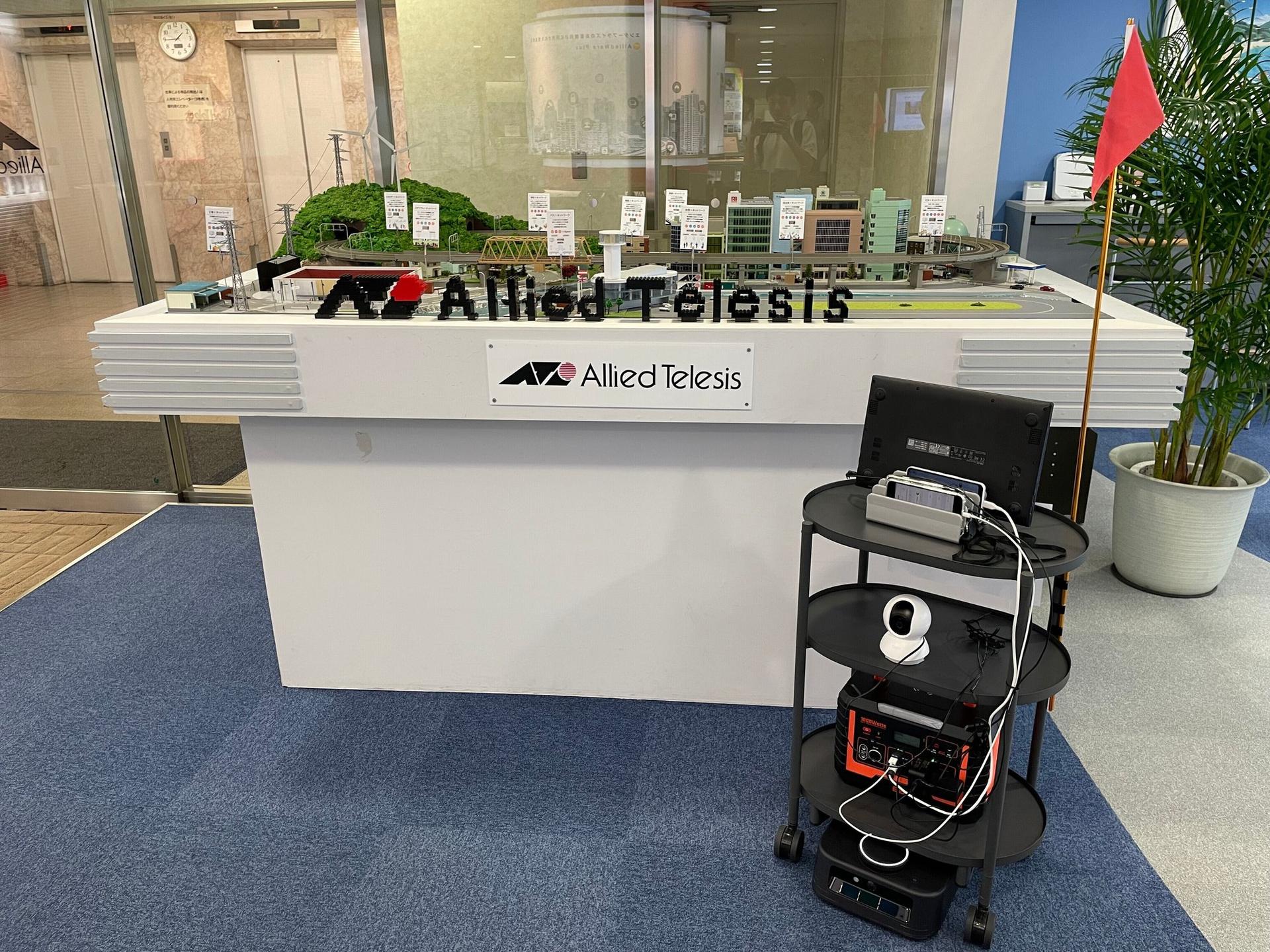
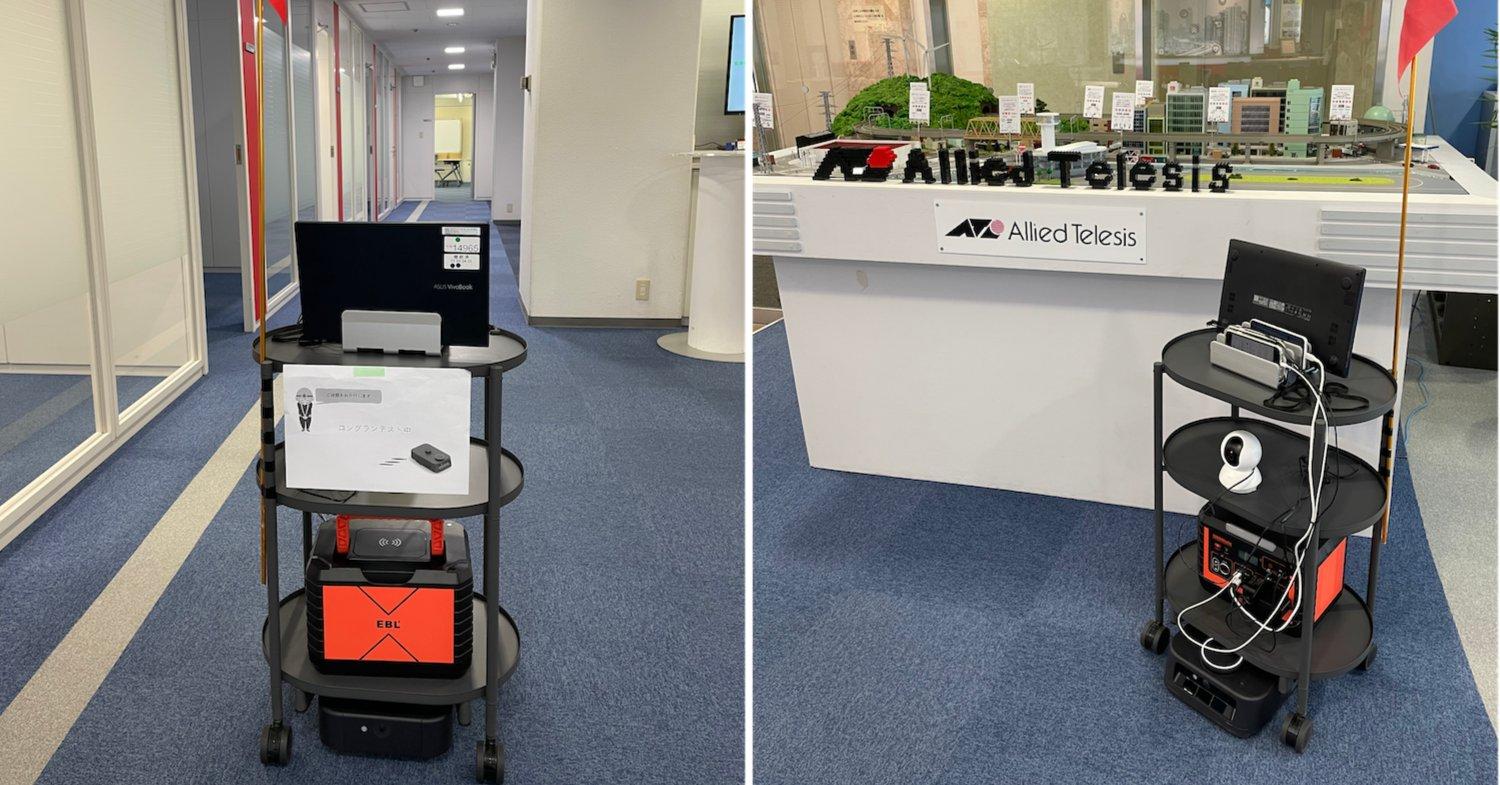
The approach is simple: place a smartphone and a laptop on Kachaka and let it patrol the office on a continuous loop.
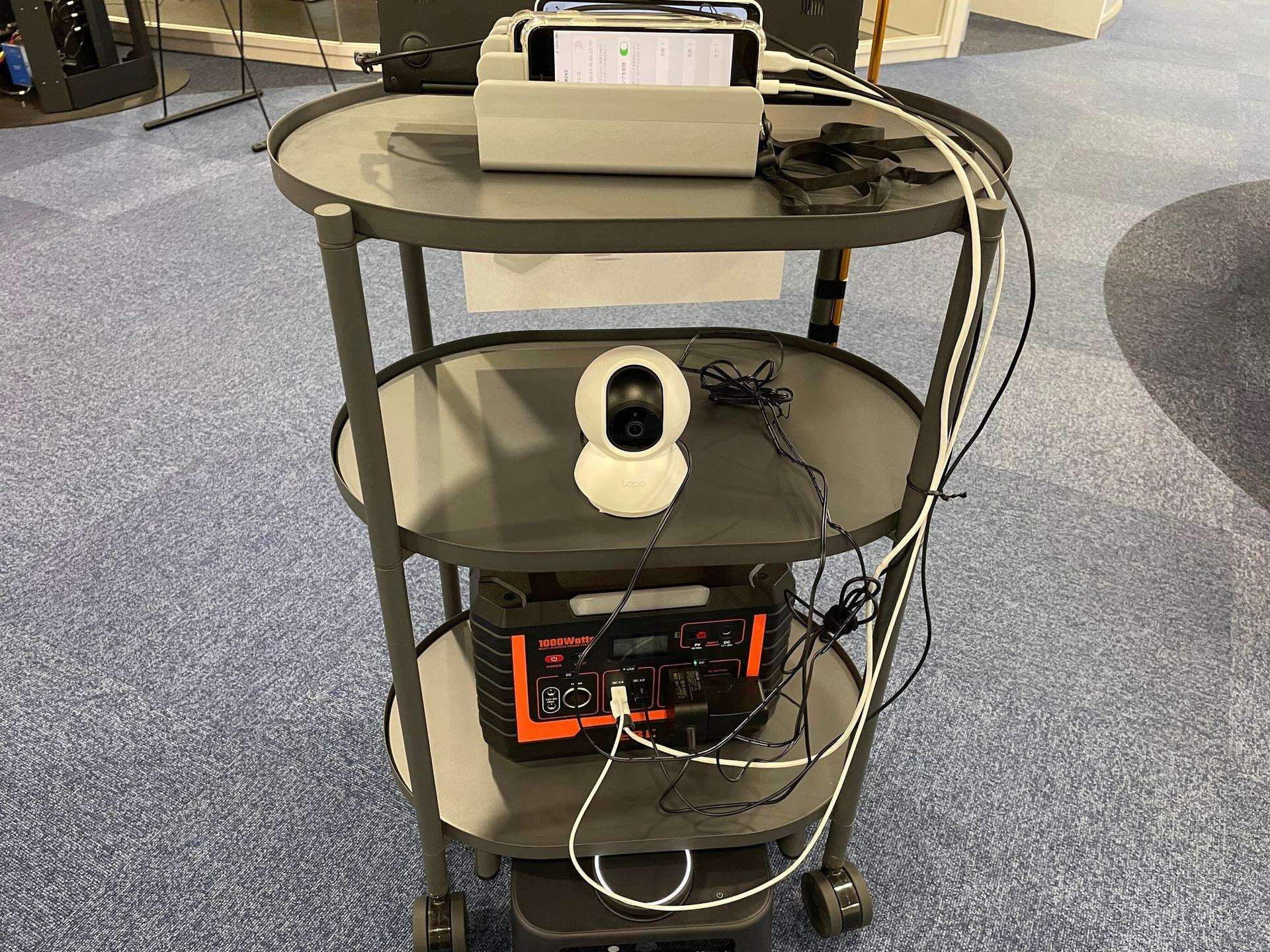
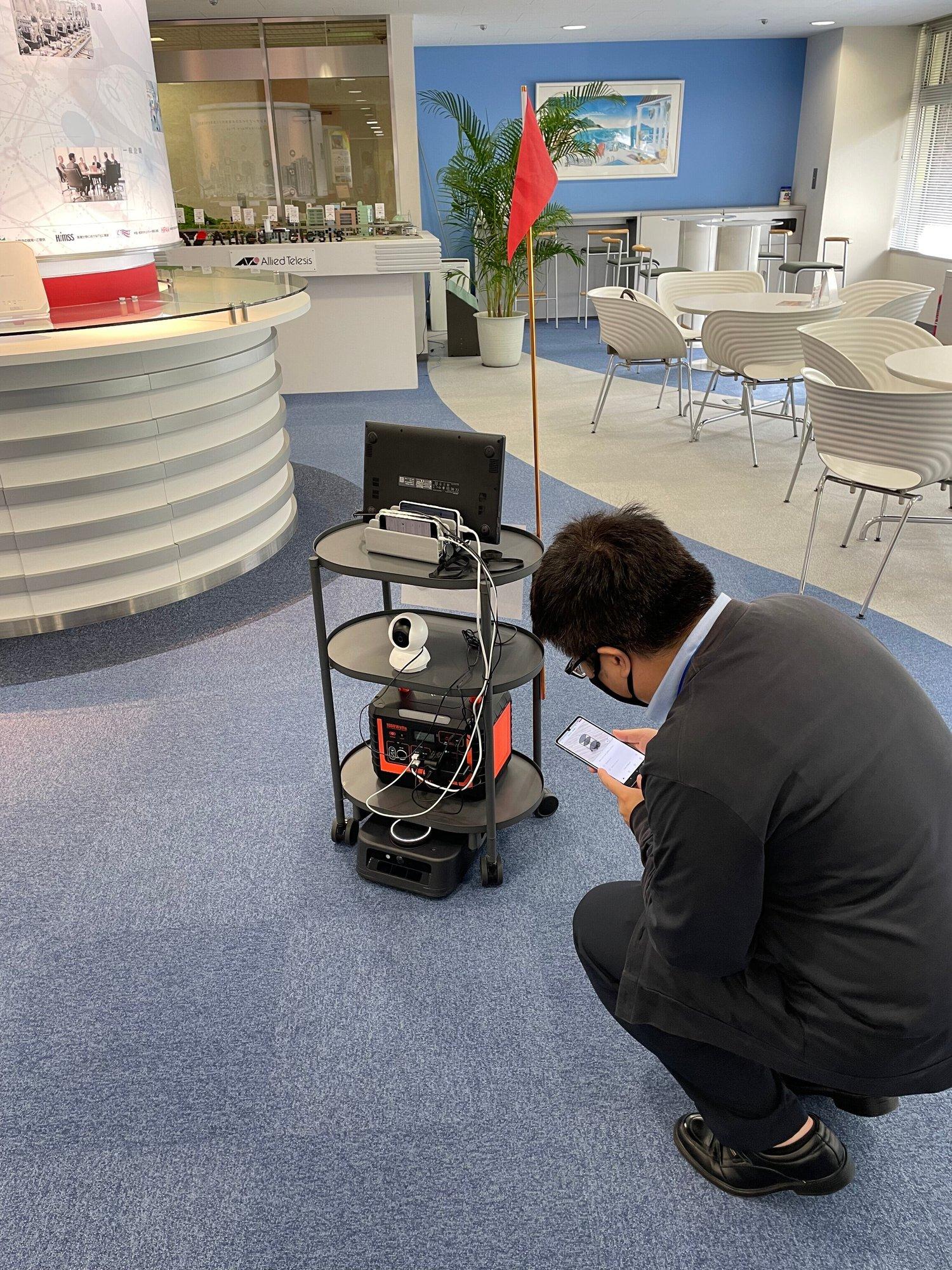
It runs mainly in the after-hours office, from around 9 p.m. to about 9 a.m. the next morning — close to 12 hours of continuous operation. On holidays it runs from morning to night as well. Because the Kachaka app’s scheduling feature alone wasn’t enough for this kind of use, the team set up a tool that programmatically taps the phone to direct the robot’s overnight runs.
“Being able to complete hundreds of hours of testing that people simply couldn’t do before makes it far easier to explain the quality of our service — both inside and outside the company. That has been hugely valuable.” The lead added that, after checking with PFRobotics, they learned Kachaka had already logged more than 110,000 meters — roughly the distance of the outbound leg of the Hakone Ekiden, and then some.
Looking Ahead
Next, the company plans to extend Kachaka to more quality-management automation, including testing new wireless networking specifications. They recently added a second unit to increase test hours. Their overseas base in New Zealand has also shown strong interest: “The moment Kachaka supports use abroad, we’ll want to ship one over right away.”