
This article is compiled from the official Preferred Robotics blog post “カチャカの外部開発者向けAPIが公開【第1弾】” (published in 2023). The original text is authoritative; some passages are summarized. A Sigma note and the original source appear at the end.
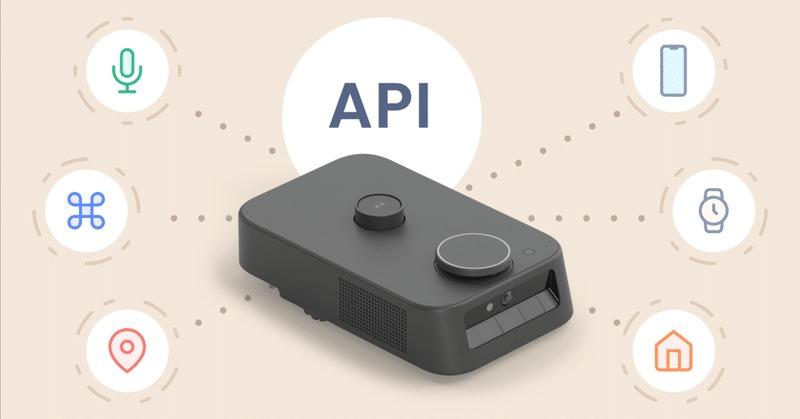
The API (Application Programming Interface) for the smart-furniture platform Kachaka is now officially open to external developers. To use it, simply update the Kachaka software to ver 2.0.0 or later through the mobile app; the same software update also adds a remote operation feature.
Kachaka is a home autonomous mobile robot launched in May 2023. With a voice or app command, it docks with dedicated furniture and carries it to a designated location. With the API now public, external developers are free to write programs that control Kachaka or wire it up to external services.
Why Open the API
Preferred Robotics notes that as Kachaka reached more and more users, feedback such as “I’d love to try it this way” and “I wish it could be used in business or education settings” kept coming in — many of the ideas going beyond what the company’s own engineers had imagined. The goal of opening the API is to let users and the Preferred Robotics team unlock Kachaka’s full potential together.
The company also encourages developers to share their creations under the hashtag “#ねえカチャカ”; popular use cases may be folded into official features down the road.
What You Can Do Once It’s Open
- Business scenarios: Build features tailored to your own needs — for example, using Kachaka as a food-delivery robot or a transport robot — to broaden where it can be applied.
- Home scenarios: Connect it with external APIs and smart devices to make everyday use more convenient.
- Education and learning: Kachaka becomes a piece of hardware that is “freely programmable and easy to obtain,” well suited to teaching robotics programming and to individuals who simply want to tinker with robot development. Because Kachaka supports ROS 2, it can also serve as a reference platform for a ROS 2 mobile robot.
What’s in This Release
This release opens the “Kachaka API” — a subset equivalent to the mobile app’s functionality — letting external developers freely build Kachaka applications within the terms of use. Highlights include:
- Source code published on GitHub under the Apache License 2.0
- A ROS 2 bridge built on the Kachaka API, released at the same time
- GitHub Discussions opened as a venue for community discussion and mutual support
- Manuals, tutorials, and sample programs all maintained on GitHub
- Some sample programs can be accessed directly in a browser through the Jupyter Notebook Server built into the Kachaka unit — all you need is a browser to start experimenting
The Kachaka API at a Glance
Command execution:
- Furniture transport and movement to a designated location
- Movement to an arbitrary position and pose
- Velocity commands
- Voice speech
- Retrieving the furniture list and destination list
- Retrieving command execution history
Sensor output:
- Odometry (own position and current velocity)
- IMU data
- LiDAR point cloud data
- Front camera images
- Object recognition results (people, furniture, charging dock, doors)
- The Kachaka map
What’s Next
At the time, Preferred Robotics said it would keep expanding the API based on developer feedback. At the time of publication, the company also previewed a series of related events: a hands-on developer workshop led by its engineers, and a talk at the Japanese ROS developer conference “ROSCon JP 2023” titled “Opening the Developer API of the Home Autonomous Mobile Robot Kachaka and Implementing Its ROS 2 Interface.”
Sigma note: Sigma’s visual inspection, bedside measurement, and offline routes are all built on top of this open API; for the original vendor documentation, see GitHub pf-robotics/kachaka-api.
Source: Preferred Robotics — カチャカの外部開発者向けAPIが公開【第1弾】 (kachaka.life). The original text and images are copyright Preferred Robotics; this article is an attributed, compiled introduction.